The realm of ultrafast science has witnessed a paradigm shift with the advent of attosecond laser technology, opening a window into the previously inaccessible real-time observation and control of electron dynamics. Building upon this foundation, a frontier now being vigorously explored is the coherent control of molecular vibrational states using attosecond laser pulses. This sophisticated technique moves beyond mere observation, aiming to actively steer and manipulate the intricate vibrational motions within molecules with unprecedented temporal precision. The implications for fundamental chemistry, materials science, and quantum information processing are profound, heralding a new era of light-matter interaction.
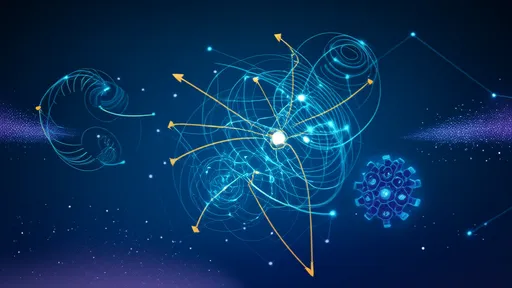
The core principle of this control hinges on the concept of quantum coherence. When a molecule is subjected to an appropriately crafted attosecond laser pulse, its constituent nuclei are not simply excited to a higher energy state; they are placed into a coherent superposition of their vibrational eigenstates. This creates a non-stationary wave packet—a localized, oscillating entity that moves in a manner reminiscent of a classical particle on the potential energy surface. The precise shape and trajectory of this wave packet are entirely dictated by the spectral phase and amplitude of the exciting laser pulse. By meticulously designing the light field, scientists can, in effect, sculpt the quantum mechanical wave function of the molecule, guiding the vibrational wave packet along a desired path.
Attosecond pulses are indispensable for this task due to their innate timescale. Molecular vibrations typically occur on a timescale of tens to hundreds of femtoseconds (10^-15 seconds). To control a process, one must interact with it on a timescale shorter than its period. Attosecond pulses (1 as = 10^-18 seconds) provide this necessary bandwidth, offering a temporal resolution fine enough to "kick" the molecule at a specific phase of its vibrational cycle. This is analogous to pushing a child on a swing; a well-timed push amplifies the motion, while a mistimed one dampens it. The attosecond pulse provides the ultimate well-timed push, allowing for the efficient transfer of energy and directionality into the vibrational mode of choice.
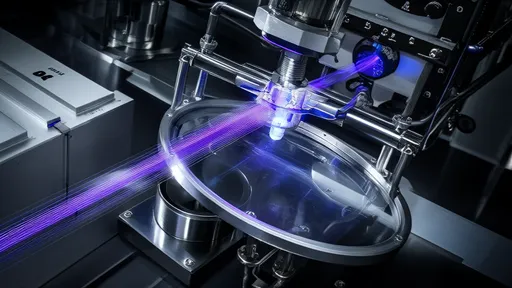
The experimental realization of this control is a feat of extreme precision. It typically involves a pump-probe scheme. An initial, carefully tailored attosecond pump pulse is used to create the coherent vibrational wave packet in either the ground electronic state or an excited state. A time-delayed, weaker attosecond or femtosecond probe pulse is then used to interrogate the system, often through techniques like high-harmonic generation, transient absorption, or photoelectron spectroscopy. By scanning the time delay between the pump and probe pulses, researchers can make a "movie" of the wave packet's evolution, confirming whether it is moving as directed. The feedback from these measurements is used to iteratively refine the shape of the initial pump pulse in a closed-loop learning cycle, often employing algorithms to discover the optimal laser field for achieving a specific molecular outcome.
The potential applications of this technology are as vast as they are transformative. In fundamental chemistry, it provides a powerful tool for mode-selective chemistry, the long-sought goal of breaking specific bonds or initiating a desired chemical reaction by depositing energy into a targeted vibrational mode, thereby bypassing statistical reaction pathways. This could lead to the development of novel synthetic routes with unparalleled efficiency and specificity. In materials science, controlling phonons (quantized vibrational modes in solids) with attosecond precision could revolutionize the management of heat and electrical conductivity, paving the way for new thermoelectric materials or ultrafast optical switches for next-generation computing.
Furthermore, the ability to prepare and maintain molecular quantum states in a coherent superposition makes them attractive candidates for quantum information science. Vibrational states could serve as robust quantum bits (qubits) or quantum memories, with their coherence being actively protected and manipulated by tailored attosecond sequences. This merges the fields of ultrafast science and quantum technology, offering a new platform for quantum simulation and computation.
Despite the remarkable progress, significant challenges remain on the path to widespread application. Generating high-intensity, tunable attosecond pulses across a broad spectral range, particularly in the infrared where many molecular vibrations reside, is still technically demanding. Furthermore, as molecules increase in complexity, their dense vibrational spectra and coupling between different modes make it exceedingly difficult to isolate and control a single state without inadvertently exciting others. Deciphering the complex multidimensional data from probe experiments to unambiguously confirm the controlled motion also requires advanced theoretical models and sophisticated computational analysis.
Looking ahead, the future of molecular coherent control is bright and inextricably linked to advancements in attosecond technology. The development of brighter attosecond sources, pulse-shaping capabilities in the XUV and infrared regimes, and more powerful computational techniques for pulse design and data interpretation will be crucial. As these tools mature, we anticipate a shift from controlling simple diatomic molecules in the gas phase to manipulating complex polyatomic molecules and even processes at surfaces and in condensed phases.
In conclusion, the coherent control of molecular vibrational states with attosecond laser pulses stands as a testament to human ingenuity in harnessing the quantum world. It transforms the molecule from a passive object of study into an active system that can be commanded and orchestrated with the flicker of a light wave. This mastery over matter at its most fundamental level of motion promises to unlock new chapters in chemistry, physics, and technology, ultimately allowing us to dictate the course of molecular events with the stopwatch precision of an attosecond.

By /Aug 25, 2025

By /Aug 25, 2025
By /Aug 25, 2025

By /Aug 25, 2025

By /Aug 25, 2025

By /Aug 25, 2025

By /Aug 25, 2025

By /Aug 25, 2025

By /Aug 25, 2025

By /Aug 25, 2025

By /Aug 25, 2025

By /Aug 25, 2025

By /Aug 25, 2025

By /Aug 25, 2025

By /Aug 25, 2025

By /Aug 25, 2025

By /Aug 25, 2025

By /Aug 25, 2025
By /Aug 25, 2025

By /Aug 25, 2025
