In the world of culinary arts, mastering knife skills is akin to a musician perfecting their scales—it’s the fundamental groundwork upon which all great performances are built. Among these essential techniques, slicing into fine threads, chopping into uniform cubes, and executing the rolling cut stand out as foundational maneuvers that separate novice cooks from seasoned professionals. These methods are not merely about dividing ingredients; they represent a harmony of precision, safety, and efficiency that transforms cooking from a chore into an art form.
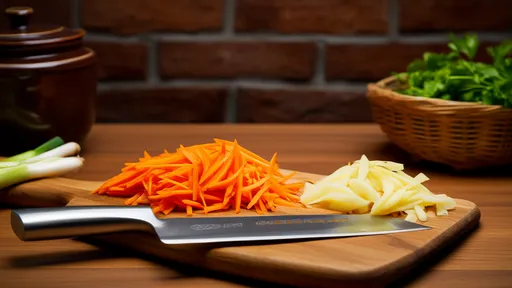
The art of julienning, or creating matchstick-sized strips, demands a blend of finesse and consistency. Begin by selecting a stable cutting surface and a sharp chef’s knife, as a dull blade can slip and cause injury or yield uneven results. For vegetables like carrots or bell peppers, first trim them to create flat surfaces, ensuring they sit firmly on the board. Slice the ingredient lengthwise into thin planks, then stack these planks and cut them into uniform strips. The key lies in maintaining a steady rhythm and using the knuckles of your non-dominant hand as a guide, keeping fingertips curled inward to avoid accidents. This technique not only enhances the visual appeal of dishes like stir-fries or salads but also promotes even cooking, allowing each strand to soften or crisp uniformly.
When it comes to dicing ingredients into cubes, precision is paramount for both aesthetics and functionality. Whether preparing a mirepoix for a soup or cubing potatoes for a stew, uniformity ensures that each piece cooks at the same rate, preventing some from turning mushy while others remain underdone. Start by squaring off rounded vegetables like onions or potatoes, creating a stable base. Slice them into even slabs, then into batons, and finally into cubes of desired size—common distinctions include large, medium, and small dice. The motion should be fluid, with the knife tip lightly touching the board as you rock the blade through the ingredient. This method minimizes waste and maximizes efficiency, as neatly cut pieces integrate seamlessly into sauces, blends, or roasts, absorbing flavors consistently.
The roll cut, or oblique cut, is a dynamic technique often used for elongated vegetables like carrots or zucchini to create angled, elegant pieces. Unlike straight cuts, this method involves rolling the ingredient after each slice, resulting in varied surfaces that expose more area to heat and seasonings. To execute it, hold the vegetable at a slight angle and make a diagonal cut. Then, roll it a quarter turn and slice again at the same angle, repeating the process along its length. This not only adds visual interest to dishes but also allows for quicker cooking and better flavor infusion, as the uneven edges caramelize beautifully in sautés or roasts. Mastery of the roll cut requires practice to maintain consistent size and angle, but it rewards the cook with professional-looking results that elevate simple ingredients.
Underpinning all these techniques is the non-negotiable priority of safety. A sharp knife might seem counterintuitively safer than a dull one, but it requires less force and provides greater control, reducing the risk of slips. Always grip the handle firmly with your dominant hand, while using your other hand to secure the ingredient with a "claw" grip—tucking fingertips away from the blade. Keep your workspace organized, with a damp cloth under the cutting board to prevent shifting, and focus entirely on the task to avoid distractions. Additionally, regular honing and proper storage of knives prolong their edge and ensure reliable performance.
Beyond safety, the choice of knife plays a critical role in executing these cuts effectively. A chef’s knife, typically 8-10 inches long, is versatile enough for most tasks, from fine juliennes to sturdy dices. For more delicate work, such as herb chiffonades, a paring knife might be preferable, while a cleaver could handle heavy-duty chopping. Regardless of the tool, maintaining its sharpness through honing and occasional professional sharpening is essential for clean, effortless cuts that preserve the integrity of ingredients.
Practice is the ultimate catalyst for proficiency in knife skills. Start with softer vegetables like cucumbers or zucchini to build confidence before progressing to harder items like carrots or potatoes. Repetition ingrains muscle memory, allowing your hands to move with automatic precision over time. Many culinary schools advocate for drills, such as slicing onions repeatedly or practicing juliennes on celery, to develop speed and consistency. Remember, the goal isn’t just swiftness but also uniformity—each piece should mirror the next, ensuring professional results in both home and commercial kitchens.
In summary, the techniques of slicing into strands, dicing into cubes, and employing the roll cut are pillars of culinary craftsmanship. They blend artistry with practicality, enabling cooks to prepare ingredients that cook evenly, present beautifully, and meld flavors harmoniously. By prioritizing safety, selecting the right tools, and dedicating time to practice, anyone can transform their knife work from clumsy to confident. These skills not only enhance efficiency in the kitchen but also deepen one’s connection to the cooking process, turning everyday meal preparation into a mindful, creative endeavor.

By /Aug 29, 2025

By /Aug 29, 2025
By /Aug 29, 2025
By /Aug 29, 2025
By /Aug 29, 2025
By /Aug 29, 2025

By /Aug 29, 2025

By /Aug 29, 2025
By /Aug 29, 2025
By /Aug 29, 2025
By /Aug 29, 2025
By /Aug 29, 2025
By /Aug 29, 2025
By /Aug 29, 2025
By /Aug 29, 2025
By /Aug 29, 2025
By /Aug 29, 2025

By /Aug 29, 2025

By /Aug 29, 2025
By /Aug 29, 2025
