In the world of culinary arts, few elements are as foundational and transformative as a well-crafted stock. From the delicate clarity of a Chinese clear broth to the rich, velvety depth of a French consommé, the journey of stock-making spans cultures, techniques, and centuries of tradition. It is the invisible hand that elevates dishes from mere sustenance to memorable experiences, the backbone upon which great soups, sauces, and stews are built. This exploration delves into the nuanced art and science behind creating these liquid treasures, offering insights into both Eastern and Western approaches that have stood the test of time.
The story begins in China, where the pursuit of purity and subtlety in broth has been refined over millennia. Chinese clear broth, or qing tang, is not merely a base but often the star of the dish—a testament to the philosophy that true flavor requires restraint and precision. The goal is a liquid so transparent one could read a newspaper through it, yet imbued with a profound, clean taste that whispers rather than shouts. Achieving this clarity is a ritual of patience. Bones, typically from chicken or pork, are blanched first to remove impurities—a non-negotiable step to prevent cloudiness. They are then simmered gently for hours, sometimes even days, at a heat so low that the surface barely shimmers. The pot is never allowed to boil vigorously; such aggression would emulsify fats and proteins, muddying the broth. Skimming is a meditative act, performed repeatedly to remove any scum or fat that rises. The result is a broth that is light in body but deep in umami, often enhanced with ginger, scallions, or a hint of Shaoxing wine, yet never overpowered by them. It is a masterclass in extraction, where time and temperature conspire to pull every bit of essence from the bones without force.
Moving westward, the French approach to stock, or fond, presents a different but equally revered philosophy. Here, the foundation is the mirepoix—a humble yet holy trinity of onions, carrots, and celery—along with bones roasted to a deep golden brown to develop complex Maillard reactions. Where Chinese broths seek clarity, French stocks often embrace body and richness. There are, of course, variations: a white stock (fond blanc) made from unroasted bones for a lighter touch, used in veloutés or delicate sauces; a brown stock (fond brun) from roasted bones, delivering a robust base for demi-glace or heartier soups; and a fish stock (fumet, quick-simmered to preserve a briny brightness. The French technique also emphasizes a thorough skimming, but it welcomes a more assertive simmer, allowing the collagen in bones to break down into gelatin, which lends a luxurious mouthfeel. Herbs like thyme, parsley, and bay leaves are tied in a bouquet garni for easy removal, infusing the stock with aromatic depth without leaving debris. This method is both scientific and artistic, balancing extraction with reduction to create a concentrate of flavor that can stand on its own or form the building blocks of countless classic dishes.
Between these two poles lie the techniques for creating consommé—the pinnacle of clarified stocks. Consommé is a marvel of culinary chemistry, a clear soup that achieves its brilliance through a process called clarification. Here, a base stock (whether chicken, beef, or vegetable) is combined with a clearmeat: a mixture of lean ground meat, egg whites, mirepoix, and acidic ingredients like tomatoes or wine. As this mixture is slowly heated, the proteins in the egg whites and meat coagulate, forming a raft that rises to the surface. This raft acts as a filter, trapping even the finest particles that cloud the stock. The key is a gentle, patient heat—too rapid a boil will break the raft, undoing the clarity. The result is a stunningly clear liquid with an intensified, pure flavor, often served as a refined starter in Western cuisines. It is a technique that demands respect for ingredients and process, a reminder that transparency in cooking is earned, not given.
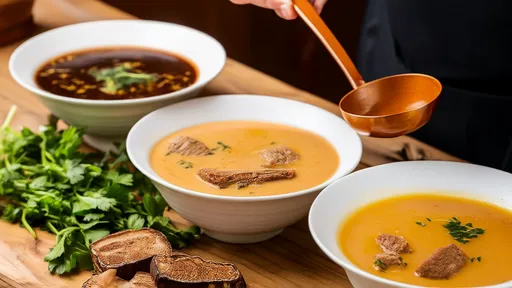
On the richer end of the spectrum are the velouté and cream-based soups that define comfort in many Western kitchens. A velouté begins with a light stock (typically chicken, fish, or veal) thickened with a roux—a cooked mixture of flour and fat—to create a smooth, velvety base. This sauce is then refined with additional stock or cream and often puréed with ingredients like mushrooms, asparagus, or poultry to create a cohesive, elegant soup. Cream soups, such as bisques or chowders, take a different route, often starting with a roux or a direct reduction of cream and stock to achieve a luscious, decadent texture. A classic lobster bisque, for instance, involves simmering lobster shells in stock to extract every bit of flavor, then enriching with cream and a touch of brandy for complexity. These soups are about indulgence and body, a contrast to the minimalist clarity of consommé or Chinese broths, yet they share the same foundational principle: a great stock is non-negotiable.
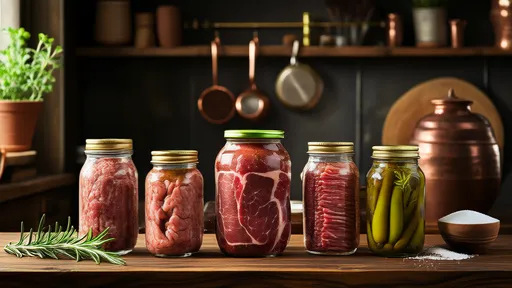
What unites these diverse techniques across cultures is a reverence for ingredients and process. Whether aiming for clarity or richness, the quality of the bones is paramount. Marrow-rich bones like beef knuckles or chicken feet are prized for their gelatin content, which provides body and silkiness. Vegetables should be fresh and roughly chopped to maximize surface area for flavor release. Water, often overlooked, is best when cold and added in proportion to the bones—too much water dilutes the stock; too little hinders extraction. Seasoning, too, requires nuance. Salt is typically added late or not at all during simmering, as reduction can over-concentrate it. Herbs and spices are used with intention, complementing rather than dominating the core flavors.
In the end, stock-making is more than a technique; it is a practice of mindfulness and respect. It teaches the cook to listen—to the gentle bubble of a simmer, to the transformation of ingredients over time, to the way flavors deepen and meld. From the clear, nuanced broths of the East to the robust, layered stocks of the West, each pot tells a story of patience, care, and cultural heritage. It is a humble beginning that leads to extraordinary ends, a reminder that the simplest things—bones, water, heat, and time—can yield the most profound results. In every spoonful of soup, in every ladle of sauce, the soul of the stock lives on, an unspoken tribute to the art of building flavor from the ground up.

By /Aug 29, 2025

By /Aug 29, 2025
By /Aug 29, 2025

By /Aug 29, 2025
By /Aug 29, 2025

By /Aug 29, 2025

By /Aug 29, 2025
By /Aug 29, 2025
By /Aug 29, 2025
By /Aug 29, 2025
By /Aug 29, 2025
By /Aug 29, 2025

By /Aug 29, 2025
By /Aug 29, 2025
By /Aug 29, 2025
By /Aug 29, 2025
By /Aug 29, 2025
By /Aug 29, 2025
By /Aug 29, 2025

By /Aug 29, 2025
